
The Architecture of Meaning: Why Semantics Matters
From Letters to Stories
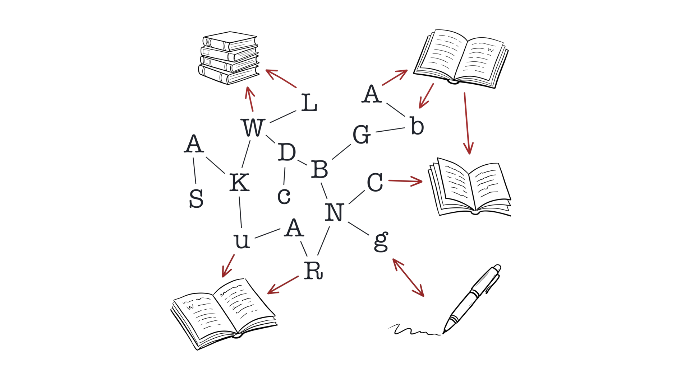
Every great story begins with the smallest of building blocks: individual letters. Think of letters as loose bricks and mortar.
On their own, a single “I,” “N,” “C,” “R,” "E," “A,” “S,”or “E” doesn't say much. But assemble them together into the word “INCREASE” and a specific image springs to life.
Connect those words into a sentence—“The revenue increased by 10%.”—and suddenly you have action, setting, and context. Layer those sentences together, and you have a rich narrative that can move an audience to tears or spark a global movement.
The Takeaway: This journey from letter to story shows why semantics—the study of meaning—is the true engine of human communication.
Why Semantics is the Engine of Communication
Semantics turns structured sentences into rich, clear narratives. Without semantic precision, communication immediately collapses into chaos, ambiguity, and misinterpretation.
What Happens When Semantics Is Missing?
Loss of Clarity: Simple statements like “The revenue increased by 10%” leave readers stranded. Are we talking about an absolute or a relative increase?
Lost Intent: The underlying message, nuance, and emotion disappear entirely.
High-Stakes Risks: In critical fields like medicine, law, or safety, misconstrued terms can lead to catastrophic errors.
The Bottom Line
Letters, words, and sentences construct the physical frame of language, but semantics provides its essential soul and clarity.
Without semantics, we aren't building meaningful stories—we are merely throwing random blocks into a pile.
Data tells you what happened.
Semantic Intelligence tells you why
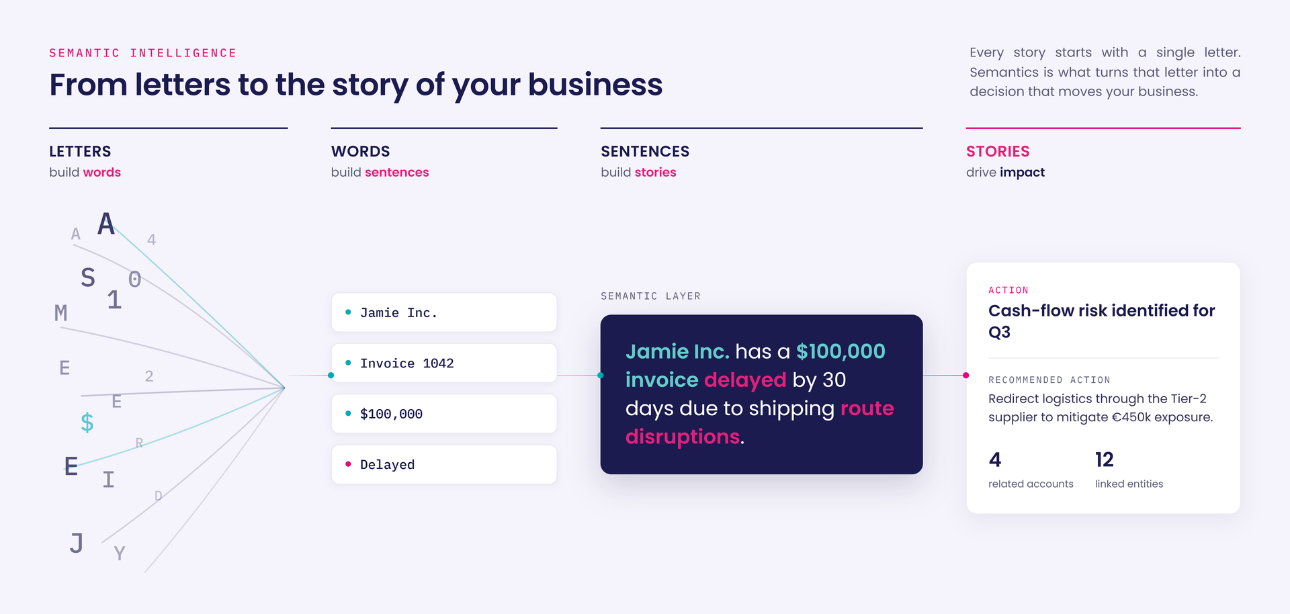
The isolated characters that traditional IT systems and basic databases store but can't interpret in vast volumes.
Combining those letters into meaningful business entities, which keyword search engines can locate and index.
Discovering the factual relationships between those entities. This is the first level of semantic context.
The system understands the deeper intent, causality, and cumulative narrative, the full story necessary for business action.
Traditional search looks for matching keywords. Semantic Intelligence connects disparate data points across your enterprise to reveal the full, interconnected narrative of your business.
Pile of words
Traditional search or basic databases treat documents like piles of "words." If an employee searches for "Customer Churn Risks," keyword systems miss documents discussing "At-risk accounts," "Subscription cancellations," or "Low usage flags."
Siloed Words
The sales department sees the "words" (CRM records), support sees different "words" (tickets), and finance sees others (invoices). Nobody sees the combined "story."
OUR REFERENCES